
When and where cherry blossoms peak in Japan, 2027
Sakura season in Japan runs late January to mid-May, sweeping south to north at roughly 30 km a day. Tokyo and Kyoto peak 25 March to 5 April, Mt Fuji and Yoshino mid-April, Tohoku late April, and Hokkaido’s Goryokaku closes around 1–10 May. The 25 spots below come from the pathhog board, sorted by trip shape, with 2027 peak windows from the Japan Meteorological Corporation and JNTO.
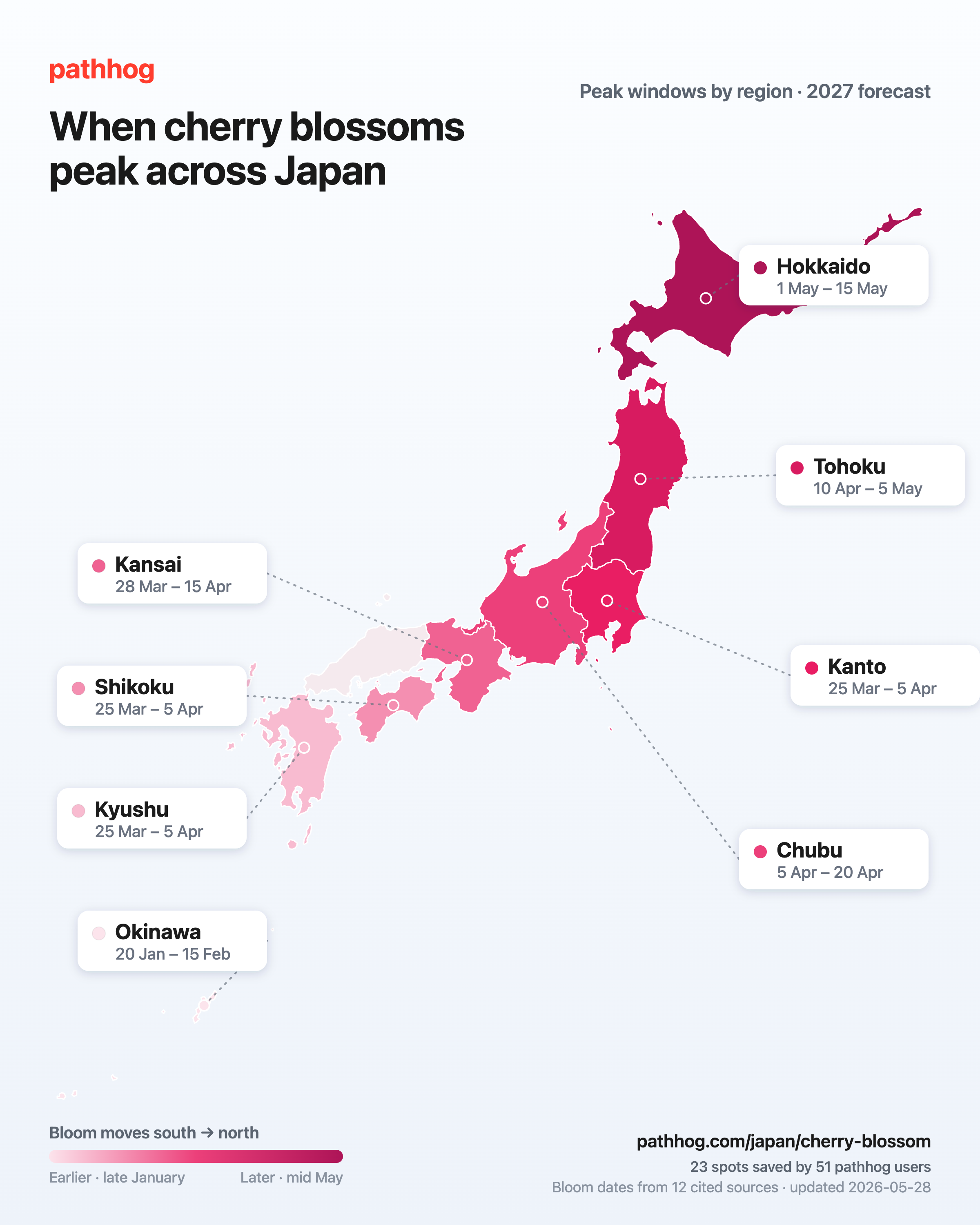
| Region | Cities | Spots | Peak start | Peak end |
|---|---|---|---|---|
| Kansai | Kyoto, 京都, Otsu, +7 | 15 | 28 Mar | 25 Apr |
| Chubu | Fujiyoshida, Oyama, Ina | 4 | 5 Apr | 20 Apr |
| Kanto | Taito, 台東区, Shibuya, +3 | 7 | 25 Mar | 15 Apr |
| Tohoku | Fukushima, Shibata, Semboku, +2 | 6 | 10 Apr | 5 May |
| Hokkaido | Hakodate, 大空町 | 3 | 1 May | 30 May |
How to plan your trip:
- Pick a week, not a place. Peak slides about six weeks across the country. Lock your dates first, then match the region.
- Use the table above to find which region peaks in your window. Tokyo and Kyoto for the last week of March into early April, Mt Fuji + Himeji + Yoshino for early-to-mid April, Tohoku for mid-to-late April, Hokkaido for early May.
- Pick 2 or 3 spots in one region rather than racing the bloom front. Sakura peaks for 7–10 days at any one spot. A two-day delay catches a different city; a four-day delay catches a different region.

Tokyo’s hanami crowd: Ueno and Yoyogi
The two parks that most travelers go to. Ueno Park is Japan’s most-visited sakura spot — 1,000 trees, free admission, full hanami picnic culture. Yoyogi Park in Shibuya is the younger-crowd alternative. Ueno Tōshō-gū sits inside Ueno Park as the historic-shrine moment. Peak 25 March to 5 April.
Ueno Park


About 1,000 sakura trees along the central path, free admission, open dawn to dusk. Picnic mats arrive from 7am on peak weekends. Combine with Ueno Tōshō-gū (next) and Ueno Zoo for a full half-day. Closest station: Ueno on JR Yamanote.
Ueno Tōshō-gū Shrine

The 1627 shrine inside Ueno Park with gold-leaf gates framed by spring sakura. Free to enter the grounds; ¥500 for the main hall. Quieter than the central path even at peak — most picnickers don’t make it this far north.
Yoyogi Park

The younger Shibuya-crowd alternative to Ueno. About 600 sakura trees across a large open lawn, less manicured than Ueno but easier to find space. Peak 25 March to 5 April. Walk-in from Harajuku Station; no entry fee.
If you want Mt Fuji + sakura
Three spots on the Yamanashi/Shizuoka side. Chureito Pagoda is the iconic Fuji + pagoda + sakura composition; Lake Kawaguchi is the lakeside reflection; Fuji Cemetery is the lesser-known scale alternative. Peak 5–20 April, two weeks later than Tokyo because of elevation.
Chureito Pagoda
The five-storied pagoda framed by Mt Fuji and sakura, photographed from the 398-step climb up Arakurayama Sengen Park. THE Japan tourism poster. Peak 10–20 April. Go at sunrise to beat the queue; the steps fill from 6am on April weekends. Train: 90 minutes from Shinjuku via the Fuji Excursion.
Lake Kawaguchi

The lakeside cherry trees with Mt Fuji reflected on the water — the second classic Fuji + sakura composition. Walk or cycle along the northern shore for the best Fuji angle. Peak 10–20 April. Pair with Chureito Pagoda above for a Fuji day from a base in Kawaguchiko.
Fuji Cemetery
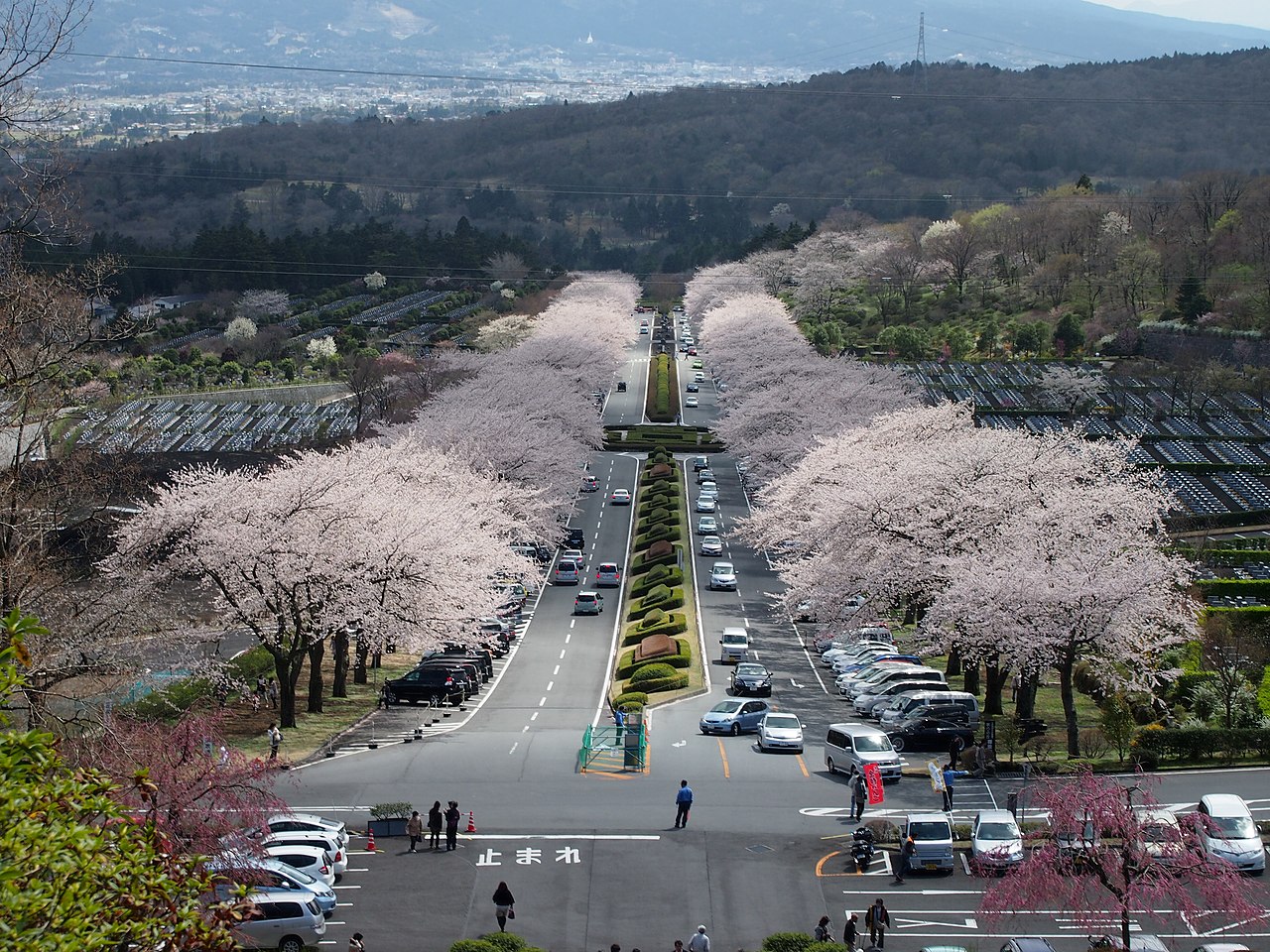
About 8,000 sakura across the rolling grounds of Fujizakura Memorial Park, with Mt Fuji in the distance. The cemetery setting is unusual but the scale and the Fuji backdrop are competitive with Chureito. Peak 5–15 April. Quieter than the other two; rent a car from Gotemba.
Kyoto’s eastern walk in spring
The corridor that anchors any sakura trip to Kyoto. Philosopher’s Path is the canal walk, Maruyama Park is the central hanami spot with the famous weeping cherry, Arashiyama is the bridge + hillside, Hozugawa is the boat ride through a sakura gorge. Peak 28 March to 10 April.
Philosopher’s Path

Two kilometres of sakura-lined canal between Ginkaku-ji and Nanzen-ji. The trees arch over the water in a pink tunnel for the full walk. Peak 28 March to 10 April. Mornings are quieter; bring coffee from one of the path’s small cafes.
Maruyama Park

Kyoto’s most popular hanami spot, anchored by a massive weeping cherry tree illuminated at night. Free entry. Picnic culture is strong; food stalls run through April. Walk-in from Yasaka Shrine; pair with the eastern Higashiyama temple corridor for a full day.
Arashiyama

The Togetsukyo Bridge with sakura-covered hills behind it. Different feel from Maruyama: less picnic, more landscape. Peak 28 March to 10 April. Add Hozogawa River Boat Ride (next) for the gorge-from-the-water view of the same hillsides.
Hozugawa River Boat Ride

A two-hour wooden boat ride down the Hozu River from Kameoka to Arashiyama, with the gorge banks lined with sakura. Peak 28 March to 10 April. Book ahead — boats fill on weekends and dates are weather-dependent. Pair with Arashiyama as the destination end of the trip.
The big three: Yoshino, Hirosaki, Kakunodate
Japan’s three most-cited sakura spots nationally. Yoshino is the scale anchor (30,000 trees across a mountain). Hirosaki is the castle moat. Kakunodate is the samurai weeping cherries. Yoshino peaks early-to-mid April; Hirosaki and Kakunodate late April into early May.
Yoshinoyama (Mt Yoshino)
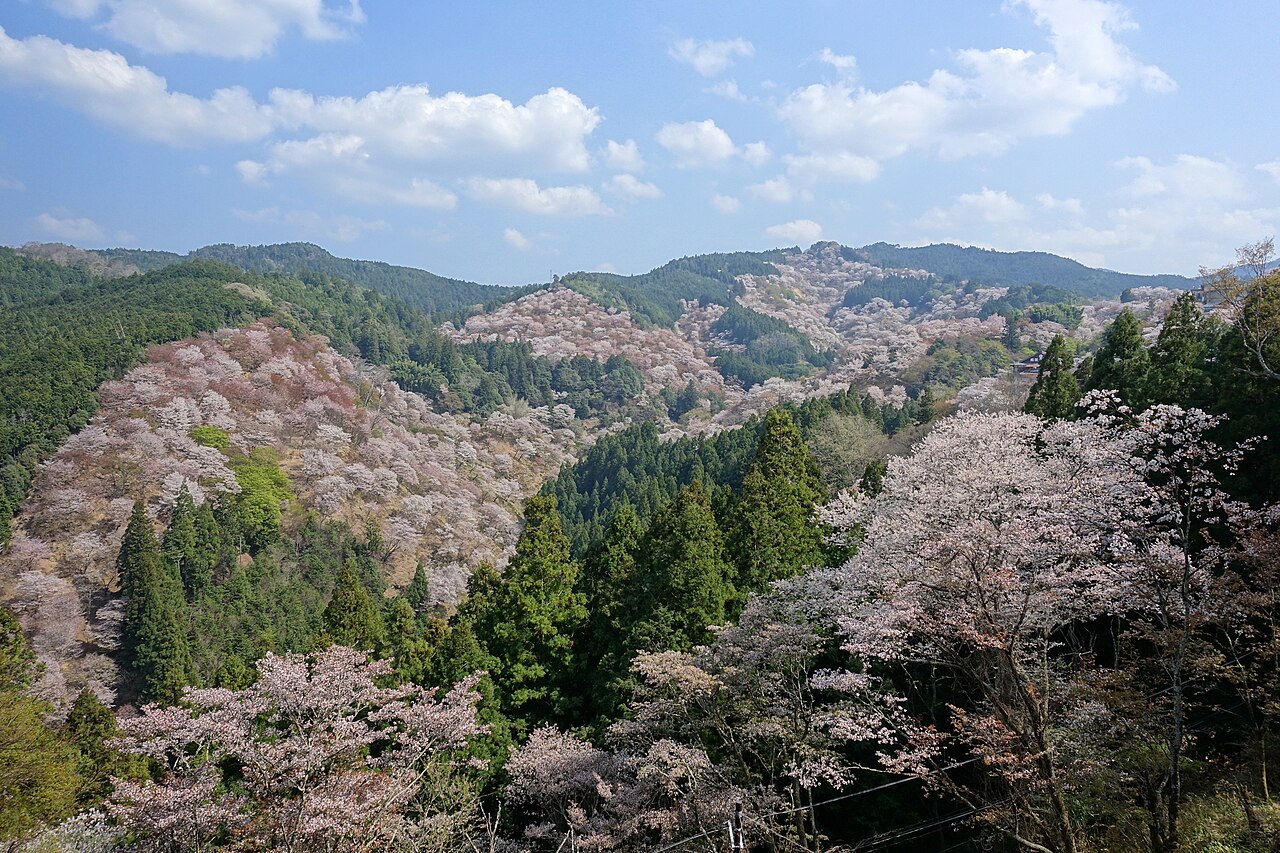
About 30,000 sakura trees across the mountainside in Nara, classified into four elevation bands (Shimo Senbon, Naka Senbon, Kami Senbon, Oku Senbon) that peak roughly a week apart. Peak window for the whole mountain is 5–20 April. Stay overnight at a shukubo for the dawn shot before the day-trip buses arrive.
Hirosaki Park

2,600 sakura surrounding Hirosaki Castle in Aomori, with the moat carpet of pink petals as the headline shot when the bloom ends. Peak 20 April to 5 May. The festival runs concurrent and includes night illumination. Fly to Aomori (90 min from Tokyo) for the easiest access.
Kakunodate

Akita’s samurai district with weeping sakura trees draping over the black walls of the old residences. The contrast is the photo. Peak 20 April to 5 May. Pair with Hinokinai River (next section), a 10-minute walk away.
Tohoku’s mid-April peak
The northeast comes alive 2–3 weeks after Tokyo. Hanamiyama Park has flowers of every color (sakura, forsythia, magnolia, plum); Hitome Senbonzakura is the 1,000-tree riverside avenue; Hinokinai River is the 2-km tunnel near Kakunodate. Peak 10–25 April for southern Tohoku, 20 April–5 May for Akita.
Hanamiyama Park

The “flower mountain” in Fukushima with sakura mixed with yellow forsythia, white magnolia, pink plum, and rapeseed. Less monochrome than the other Tohoku spots. Peak 10–25 April. Shuttle bus from Fukushima Station during the festival.
Hitome Senbonzakura

A 2-km avenue of 1,000 sakura trees along the Shiroishi River in Miyagi, framed by snow-capped Zao mountains in the distance. Peak 10–25 April. The composition is the river + sakura + mountains — clean and panoramic.
Hinokinai River

400 sakura trees along the Hinokinai River in Kakunodate, peaking at the same time as the samurai district (above). Walk between the two for the full Kakunodate day. Peak 20 April to 5 May.
Hokkaido’s May closer
The final 10 days of the season. Goryokaku Park is the star-shaped fort outlined in sakura; the tower gives you the aerial view. Higashimokoto Shibazakura isn’t true sakura but the mid-May pink-pink-pink timing makes it a natural closer. Peak 1–10 May for sakura, mid-May for shibazakura.
Goryokaku Park

About 1,600 sakura trees around the moat of the star-shaped 19th-century fort in Hakodate. Peak 1–10 May. Walk the perimeter, then ride the Goryokaku Tower (next) for the aerial. Free park entry, ¥1,000 tower.
Goryokaku Tower

The 107-metre observation tower built specifically to show the star fort from above. The sakura-outlined star is the photo that only exists here. Peak 1–10 May. Buy a combined ticket with the park itself.
Higashimokoto Shibazakura Park
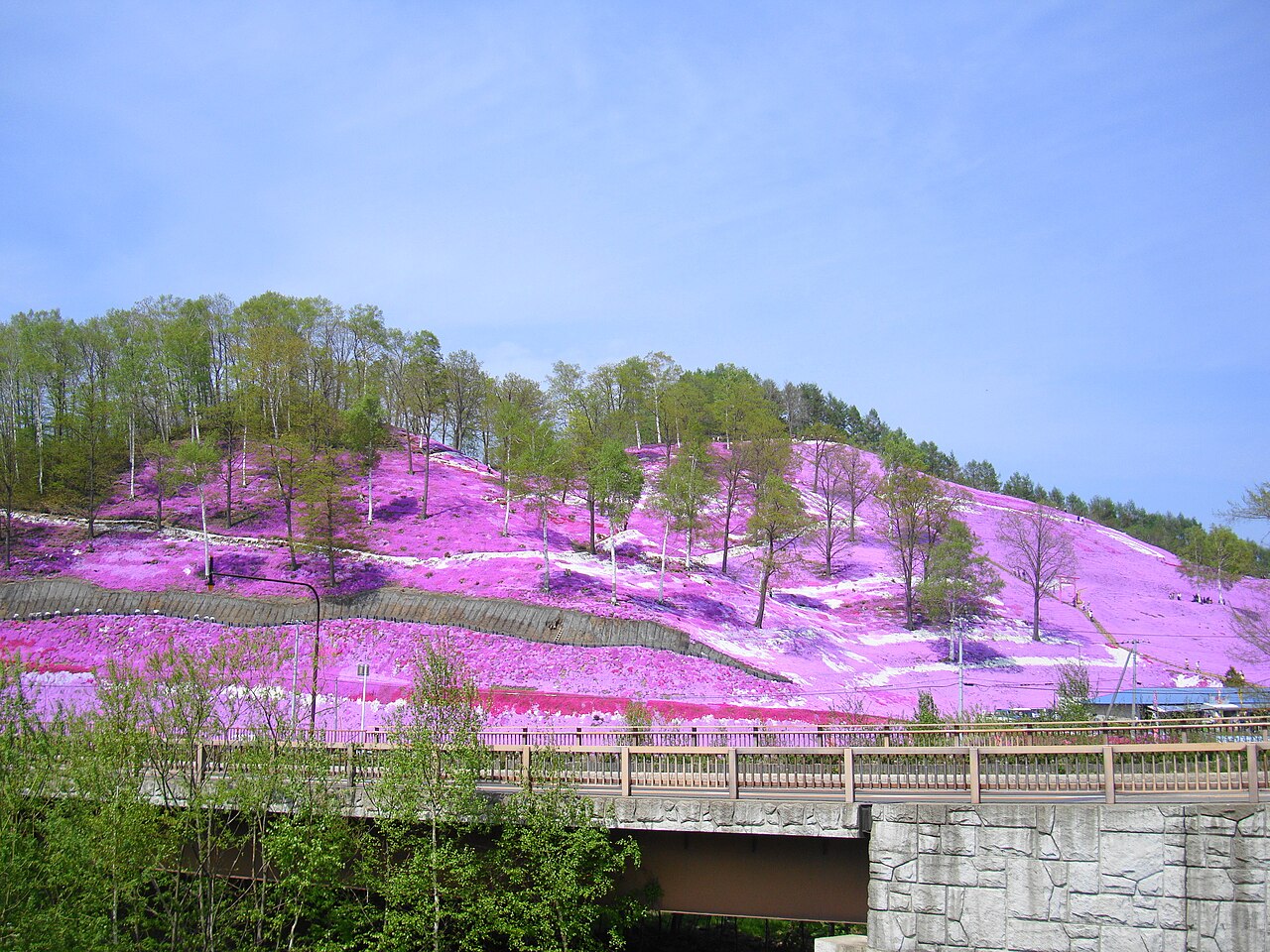
Not true sakura — this is shibazakura (moss phlox) carpeting the hillside in bright pink. It peaks mid-May, right after Goryokaku, and lets the season extend. Easiest combo: fly to Memanbetsu, hit Higashimokoto then loop south via Lake Mashu.
Castles and temples worth the detour
Three sakura-anchored single spots that don’t fit a corridor but reward the side trip. Himeji Castle (Hyogo) for the white-castle-plus-pink shot. MIHO Museum (Shiga) for the curved tunnel approach. Takato Castle (Nagano) for the distinctive pink Takato cherry variety. All peak 1–20 April.
Himeji Castle

The white keep of Himeji-jo with 1,000 sakura in the surrounding park is one of Japan’s most-photographed castle compositions. Peak 1–10 April. UNESCO World Heritage; pair with Kobe for the long weekend. 30 minutes from Kobe on the Shinkansen.
MIHO MUSEUM

The silver curved tunnel approach framing a sea of sakura is the shot the architect (I.M. Pei) designed for. Peak 5–15 April. Museum hours apply; check before the trip. 50-minute shuttle bus from Ishiyama Station via the Shigaraki valley.
Takato Castle area

Top-3 national, but the third one most travelers haven’t heard of. 1,500 Takato kohigan cherries with a distinctive deep-pink colour that doesn’t exist in standard Somei-yoshino. Peak 5–20 April. 3 hours from Tokyo by JR + bus.
Lesser-known but worth saving
Three spots that round out the trip. Tokyo-outer history at Sakitama Kofun Park, the giant Buddha at Ushiku Daibutsu, the Kyoto-area canal cruise.
Sakitama Kofun Park

1,500-year-old burial mounds in Saitama with sakura on top — a strange and quiet alternative to Ueno’s crowds. Peak 25 March to 5 April. 90 minutes from Shinjuku on JR. Pair with the Saitama Museum at the same site.
Ushiku Daibutsu

The 120-metre bronze Buddha (one of the tallest statues in the world) framed by 5,000 sakura trees. Peak 1–15 April. The scale contrast is the photo. 90 minutes from Tokyo by train + bus.
First Lake Biwa Canal

The historic Meiji-era canal between Lake Biwa and Kyoto, with sakura along the Okazaki section and wooden boat rides during the season. Peak 28 March to 10 April. Pair with Heian Shrine and Nanzen-ji for a full eastern-Kyoto morning.
Map
All spots on the map, filterable by region. Tap a pin to jump to the write-up above.
- Ueno ParkWander through Ueno Park's 800 cherry blossom trees or explore its walking paths, lake, zoo, and museums.
@tokyo_seasons
- Ueno Tōshō-gū Shrine上野公園内にある静かな神社で、鳥居や灯籠とともに桜の木に囲まれた落ち着いた雰囲気です。
 Ueno Zoo日本最古の動物園の一つで、パンダをはじめ400種以上の動物と触れ合える場所です。
- Yoyogi ParkWander through this expansive park and delight in the vibrant spectacle of cherry blossoms.
- Ushiku DaibutsuVisit the world's tallest bronze Buddha statue, standing 120 meters high with an interior observation deck.
- Sakitama Kofun ParkWalk among nine ancient burial mounds from the 5th to 7th centuries in this Saitama park.
- Chureito Pagoda山の上にある五重塔からは富士山と桜の景色が楽しめる、静かで美しい公園です。
- Lake KawaguchiViews of Mount Fuji are framed by cherry blossoms at this scenic lake, a relaxing getaway from Tokyo.
- Fuji CemeteryThis vast cemetery park is a designated 'Top 100 Cherry Blossom Spot' with views of Mount Fuji.
- Philosopher's Path桜並木に囲まれた静かな運河沿いの散策路で、春には花見の名所として多くの人が訪れる場所です。
- Maruyama Park夜の照明に照らされた枝垂れ桜が水面に映り、幻想的な光景を楽しめる京都最古の公園です。
- ArashiyamaUn distrito en Kyoto con cerezos en flor, bosques de bambú y vistas tranquilas junto al río.
 Shobo-ji TempleCherry blossoms frame the path to this tranquil Kyoto temple, which has a rock garden representing animals.
 Takenaka Inari ShrineA path lined with red torii gates and blooming cherry blossoms leads through this charming Kyoto shrine.
 Former Main Building of the Kyoto Prefectural OfficeIts windows look out onto blooming sakura trees from this 1904 Renaissance-style former government building.
- First Lake Biwa CanalWalk a historic 1890 canal tunnel lined with cherry blossoms and early reinforced concrete bridges.
- Yoshinoyama山肌一面に咲き誇る桜の景色が楽しめる、吉野山の下千本エリアです。
 Takaminosato (Sky Garden Takami no Sato)See 1,000 weeping cherry trees bloom across a hillside each April, with a view from the observatory.
 Tsubosaka TempleExperience the mystical allure of Tsubosaka-dera, a 717 AD temple in Nara blending Japanese and Indian influences, crowned by a grand Bud…
 Abe Monju-in TempleVibrant cherry blossoms and red torii gates adorn this historic Nara temple with Japan's largest statue of Monju Bosatsu.
 Higashifukita TennmashaFounded in 1288, this Ibaraki shrine is set within a peaceful, lush forest.
 Takayama ShrineA traditional Japanese shrine in Nara with a red bridge and cherry blossoms surrounding the area.
- Himeji CastleJapan's iconic white castle, a UNESCO site never destroyed by war, is surrounded by cherry blossoms and a red bridge.
- MIHO MUSEUMI.M. Pei designed this mountain museum you enter via a long tunnel and a suspension bridge to see ancient art under a geometric glass roof.
- Hanamiyama ParkWalk a handcrafted path through 7,000 flowering peach trees and forsythia bushes, with a traditional house among the blooms.
- Hitome SenbonzakuraWalk a riverside path lined with 1,200 cherry trees, with views of the snow-capped Zao mountain range in the distance.
- KakunodateA historic street with well-preserved samurai residences and weeping cherry trees, especially beautiful during spring.
- Hirosaki Park桜の花が満開の弘前公園は、弘前城の敷地内にある市立公園です。
- Hinokinai RiverA riverbank lined with cherry trees that create a scenic spot for hanami during spring.
 Hirohako Spring Sightseeing Campaign 2025A spring tourism campaign in Hirosaki featuring the character Sakura Miku to promote local sightseeing.
- Goryokaku ParkExplore the historical grounds of a star-shaped fort, now a park famous for its spring cherry blossoms.
- Goryokaku TowerVisit the observation tower to see a scale model of the star-shaped fort and buy local souvenirs.
- Higashimokoto Shibazakura Park春になると斜面いっぱいにピンクの芝桜が咲き誇る、約10万平方メートルの公園です。
- National Shinshu Takato Youth Outdoor Learning CenterA national youth outdoor learning center located in the cherry blossom-rich town of Takato, Nagano.
FAQ
When does sakura actually peak in Japan in 2027?
JMC publishes the first sakura zensen forecast in late February and updates weekly through April. Predicted 2027 peaks based on long-run averages: Okinawa late January, Kyushu and Shikoku around 25 March to 5 April, Tokyo and Kyoto 28 March to 10 April, Mt Fuji area and Yoshino 5 to 20 April, Tohoku 10 to 25 April, Hirosaki and Kakunodate 20 April to 5 May, Hokkaido Goryokaku 1 to 10 May. Warmer winters pull the bloom forward by a few days; cold springs push it back.
Where can I see cherry blossoms in late April or early May?
Tohoku and Hokkaido. Hirosaki Park (Aomori) and Kakunodate (Akita) peak 20 April to 5 May. Hinokinai River runs at the same time. Goryokaku Park (Hakodate, Hokkaido) is the closer at 1–10 May. Tokyo and Kyoto are finished by mid-April, but the bloom front catches up in the north — a north-loop trip from late April lets you experience peak sakura that’s already over down south.
Is a Tokyo + Kyoto trip enough to see cherry blossoms?
Yes, if your dates fall in the last week of March or first week of April. Tokyo and Kyoto peak within a few days of each other, both around 28 March to 5 April. The 2h15 Shinkansen makes a 4–5 day Tokyo + Kyoto loop very feasible. If your dates are later (mid-to-late April), substitute Tohoku for the second leg — Hanamiyama or Hirosaki.
Where is the Mt Fuji + cherry blossom photo taken?
Chureito Pagoda at Arakurayama Sengen Park in Fujiyoshida, Yamanashi. 398 steps climb up the park to the pagoda’s viewing deck, with Mt Fuji directly behind and sakura in the foreground. Peak 10–20 April. The second iconic Fuji + sakura composition is Lake Kawaguchi’s north shore, with the lake reflection. Both are within a 30-min drive of each other.
How crowded is Yoshino at peak?
Crowded but manageable because of scale. Mt Yoshino’s 30,000 trees spread across four elevation bands (Shimo, Naka, Kami, Oku) over a 7-km mountainside, so the crowd disperses. Naka Senbon (mid-band) is the central viewpoint and the busiest. Oku Senbon (upper band) is a 2-hour walk uphill and stays much quieter. Stay overnight at a shukubo for the early morning shot before the day-trip buses arrive at 10am.
What if the forecast is wrong and the blossoms are early or late?
Sakura is more forecast-stable than autumn leaves, but a 3–5 day swing is normal. Book accommodation flexibly — week-of-the-bloom rates are punishing if you’re stuck. Track JMC weekly from late February. If your dates lock you out of Tokyo/Kyoto peak, substitute Mt Fuji (a week later) or Tohoku (2–3 weeks later) — the bloom front moves north reliably even when individual cities deviate.
More seasonal Japan guides


Save these places on pathhog


- Sources
- JMC (Japan Meteorological Corporation) sakura zensen forecast, JNTO cherry blossom guides, Japan-Guide rundown, per-place tourism bureau pages, creator notes from @japan_web_magazine, @tiffy.cooks, @editorofliu, @triptojapan_
- Peak timing
- Region-level windows from JMC + JNTO; per-place windows from local tourism boards. Refresh due late Feb 2027 when JMC publishes the year's first sakura zensen forecast.
- Updated
- May 2026 · View the live board on pathhog