
Which Taipei night market should you go to (and what to eat)
Taipei has more than ten night markets and they are not interchangeable. Raohe is the clean first-timer pick, Shilin is the biggest and most touristy, Ningxia is the compact one serious eaters love, Nanjichang is where locals go and tourists don’t. This guide ranks them by what travelers actually save on pathhog, then names the eight dishes worth hunting and the stall that does each one best.
How to choose:
- Pick the market by what you want, not by what’s most famous. The most-Instagrammed (Shilin) is not the best-eating. The sections below are sorted by job, not by size.
- Go hungry and go in one direction. Most markets are a single street or loop. Walk it once to scout, then double back for the 4–5 things you actually want.
- Bring cash and small notes. Most stalls are cash-only and NT$50–150 a plate. An empty stomach and NT$500 covers a full night.

If you only do one: Raohe Street Night Market
The cleanest first-timer pick. Raohe is a single 600-metre straight street anchored by the Ciyou Temple at one end, so you can’t get lost: walk in, eat down one side, walk back up the other. It has the famous Fuzhou pepper buns at the entrance, a Michelin Bib Gourmand stall or two, and enough variety without the sprawl and crowds of Shilin. Start here if it’s your first night in Taipei.
Raohe Street Night Market

Songshan district, walkable from Songshan Station (green line). The pepper-bun stall just inside the temple entrance is the obvious first stop, with a clay-oven queue that moves fast. Open roughly 5pm–midnight. Less overwhelming than Shilin, more compact than the metro sprawl of the bigger markets.

If you want the biggest and most famous: Shilin
Shilin is Taipei’s largest night market and the one every first-timer has heard of. That cuts both ways: huge variety and a real underground food court, but also tour-bus crowds, some inflated tourist pricing, and a lot of clothes-and-phone-case filler between the food. Go for the scale and the people-watching; don’t expect the best value.
Shilin Night Market


Jiantan Station (red line), not Shilin Station. The basement food court is where the cooked-food stalls cluster. Famous for oversized fried chicken cutlets, stinky tofu, and small-bowl games. Busiest after 7pm; weekends are a crush. Best for variety and atmosphere, not for eating like a local.
Shilin stinky tofu

If you try stinky tofu once in Taipei, the Shilin stalls are the gateway version, deep-fried and served with pickled cabbage rather than the more pungent braised style. The smell is the point. Pair it with the cold noodles many of the same stalls sell.
If you’re a serious eater: Ningxia Night Market
The foodie pick. Ningxia is a short 200-metre stretch with almost no filler: no clothing stalls, no games, just food, most of it cooked-to-order Taiwanese classics that have been at the same spot for decades. It’s compact enough to eat everything good in one pass, which is exactly why people who care about the food choose it over Shilin.
Ningxia Night Market

Datong district, near Shuanglian Station (red line). Known for oyster omelette, taro balls, sesame oil chicken, and a clutch of Michelin Bib Gourmand stalls in a small radius. Quieter and more local than Shilin while still central. The best single market if you only care about eating.
If you want local with no tourists: Nanjichang
The deep cut. Nanjichang is a residential-neighbourhood market in a part of town with almost no foreign visitors, several Michelin Bib Gourmand stalls, and prices that haven’t been bumped for tourists. You go here to eat the way Taipei actually eats, not to take photos.
Nanjichang Night Market

Zhongzheng district, a short walk or cab from Xiaonanmen Station. Tight, local, and packed with regulars. Known for braised pork rice, sesame oil chicken, and old-school Taiwanese stalls that sell out. Go early; the best things finish before the night does.
If you want old-Taipei atmosphere: Huaxi Street
Huaxi is the covered, lantern-lit “Snake Alley” in the old Wanhua district near Longshan Temple, once Taipei’s red-light and snake-soup street and now a calmer, atmospheric stretch of traditional eats and massage parlours. It’s more about the old-Taipei feel than cutting-edge food, and it pairs naturally with a Longshan Temple visit.
Huaxi Street Tourist Night Market

Longshan Temple Station (blue line). Covered, so it’s the rain-proof option. Herbal soups, seafood, and traditional snacks. Tamer than its reputation, and the most historically interesting of the markets. Combine with Longshan Temple and the Bopiliao historic block next door.
The eight dishes to actually hunt
Markets are the where; these are the what. Eight Taiwanese classics worth crossing town for, with the stall that does each one best from the pathhog board.
Gua bao at Yuan Fang

The Taiwanese pork-belly bun: a steamed folded bun packed with braised pork belly, pickled mustard greens, crushed peanuts, and coriander. Yuan Fang at Raohe is the canonical version and the one most travelers save. One is a snack, two is dinner.
Beef noodle soup at Yong Kang

Taiwan’s unofficial national dish: hand-pulled noodles in a deep braised-beef broth with tendon and shank. Yong Kang Beef Noodles on the Yongkang Street food strip is the textbook bowl. Order the half-tendon-half-meat. The clear-broth version is the connoisseur’s pick over the spicy red braise.
Oyster omelette at Yuan Huan Pien

The night-market staple: small oysters bound in a sweet-potato-starch batter, fried with greens and egg, finished with a sweet-savoury pink sauce. Yuan Huan Pien does the gooey-not-rubbery version. The texture is the whole point.
Soy milk breakfast at Fuhang
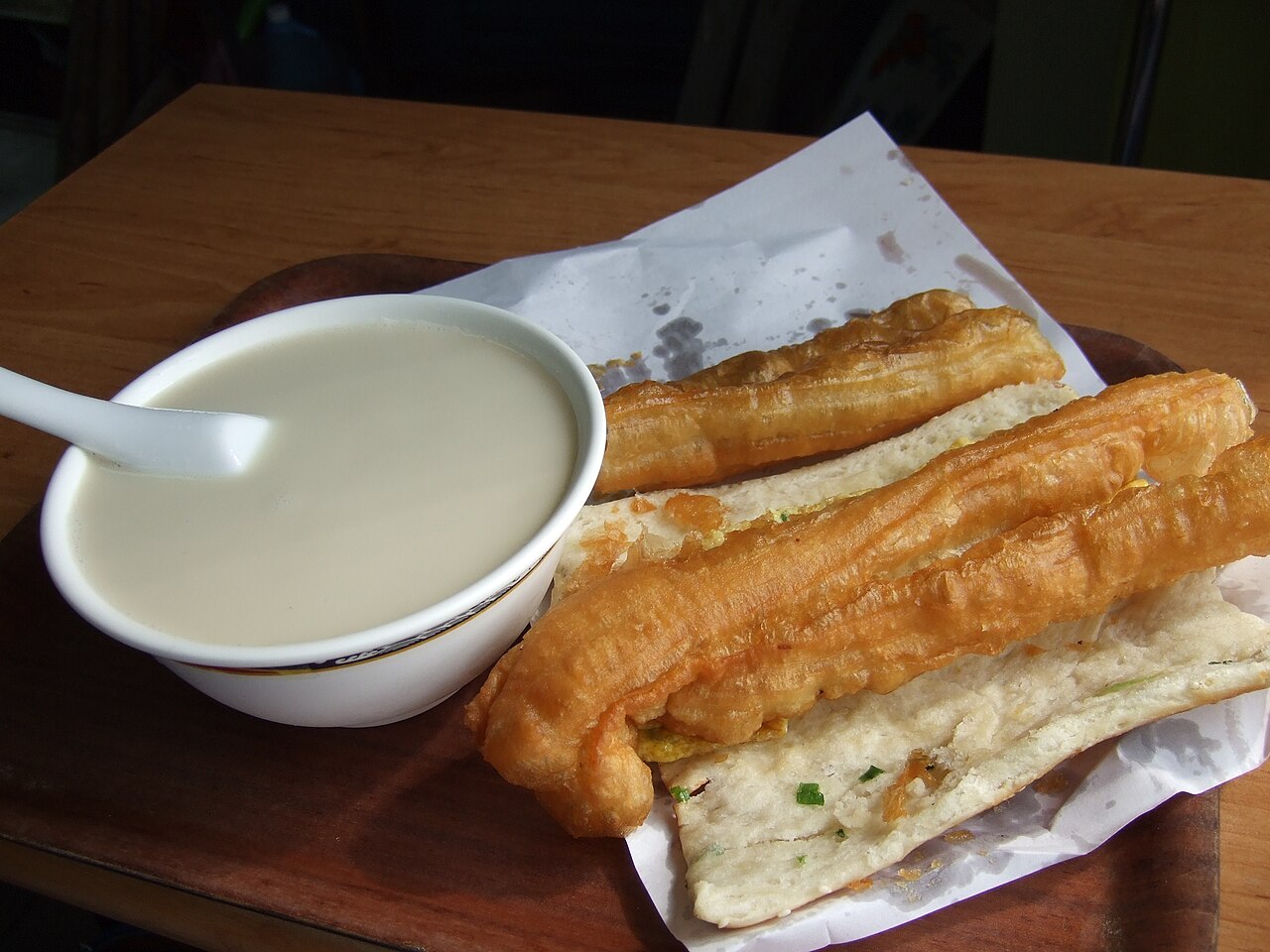
Not a night-market dish but the breakfast every Taipei trip should include once. Fuhang Soy Milk in the Huashan Market building draws a queue down the stairs before 7am for fresh hot or cold soy milk, crisp youtiao, and shaobing flatbread with egg. Worth the early alarm and the wait.
Bubble tea at Chun Shui Tang

Drink it at the source. Chun Shui Tang is credited with inventing bubble tea, and its Taipei branches still serve the original hand-shaken version. Order it less sweet than default. This is the one bubble tea in the city with a genuine origin-story claim.
Pineapple cake at SunnyHills

The souvenir that’s actually worth buying. SunnyHills makes a buttery, not-too-sweet pineapple cake with a tart winter-pineapple centre, and the flagship gives every visitor a free whole cake plus tea, no purchase required. The standard against which all other pineapple cakes are judged.
Also worth hunting: mee sua and lu rou fan
Two more classics that close out the eight. Ay-Chung Flour-Rice Noodle in Ximending is the standing-and-slurping institution: one thick, glossy, intestine-laced mee sua eaten on the street from a paper bowl, permanent queue, add chilli and black vinegar from the counter. And lu rou fan (braised pork rice), finely chopped braised pork belly over rice, is the cheapest genuinely great thing you’ll eat in Taipei; Huang Ji does a benchmark bowl and it’s the dish locals measure a market by. Both are pinned on the map below.
Map
Every market and stall above, on the map. Tap a pin to jump to the write-up.
- Raohe Night MarketBuzzing, venerable nighttime street market offering shops & street food vendors.
- Shilin Night MarketOne of Taipei's largest and most famous night markets, centered around a temple.
@fallane
- Shilin Night Market Stinky Tofu (Hometown Cold Noodles)Find this stinky tofu and cold noodle spot inside the massive Shilin Night Market.
- Ningxia Night MarketA covered outdoor night market packed with traditional Taiwanese food stalls.
- Nanjichang Night MarketDozens of food vendors line this bustling night market, serving traditional Taiwanese street eats.
- Huaxi Street Tourist Night MarketThis historic tourist night market has two covered arcades with stalls selling local eats, including snake dishes.
- Yuan Fang Gua BaoA 60-year-old shop makes gua bao with pork belly, pickles, and peanuts in a steamed bun.
- Yong Kang Beef NoodlesTheir beef noodles feature tender beef and rich broth in an unpretentious setting.
- Yuan Huan Pien Oyster Egg OmeletteThey've been making oyster omelets with Tainan oysters and homemade sauce here since 1965.
- Fuhang Soy MilkGet traditional shaobing and soy milk at this 1958 breakfast spot on the second floor of a market.
- Chun Shui TangThis restaurant chain is a pioneer credited with inventing bubble tea.
- SUNNY HILLSThey give you a sample pineapple cake and tea as soon as you walk in.
FAQ
Which Taipei night market is the best?
Depends what you want. Raohe is the best first-timer pick (compact, easy to navigate, strong variety). Ningxia is the best for serious eaters (short, no filler, Michelin Bib Gourmand stalls). Shilin is the biggest and most famous but the most touristy. Nanjichang is the best for eating like a local with no tourists. There is no single “best”: pick by the job.
What time do Taipei night markets open?
Most run roughly 5pm to midnight, with stalls hitting full swing after 7pm. Some popular stalls sell out before closing, so the sweet spot is 6–9pm: open enough to have everything, early enough that the best things haven’t run out. Weekends are noticeably more crowded than weekdays.
How much money do I need for a Taipei night market?
Budget NT$300–600 per person (roughly USD 10–20) for a full night of grazing. Most dishes are NT$50–150. Bring cash in small notes: the overwhelming majority of stalls are cash-only, and few break large bills.
What should I eat at a Taipei night market?
The classics worth hunting: gua bao (pork-belly bun), beef noodle soup, oyster omelette, stinky tofu, pepper buns (Raohe’s signature), bubble tea at its origin, and braised pork rice (lu rou fan). Graze small portions across many stalls rather than filling up at one.
Is Shilin Night Market worth it?
For atmosphere and scale, yes; for the best food, not really. Shilin is the largest and most famous, so it’s worth seeing once, but it’s crowded, has tourist pricing, and a lot of non-food filler. If your priority is eating well, Ningxia or Nanjichang beat it. If you want the iconic big-market experience, Shilin delivers that.
Which night market is near Longshan Temple?
Huaxi Street Tourist Night Market (“Snake Alley”) is a few minutes’ walk from Longshan Temple in the old Wanhua district. It’s covered (rain-proof), historically interesting, and pairs naturally with a Longshan Temple visit and the Bopiliao historic block. Tamer than its old reputation.
More pathhog food guides

Save these places on pathhog


- Sources
- Ranked from the pathhog Taipei board (markets and stalls travelers save), cross-referenced with the Taipei Michelin Bib Gourmand street-food list and creator notes. Market layouts and opening hours from Taipei City tourism listings.
- Updated
- June 2026 · View the live board on pathhog